
613 Billeder af sort hus
Sorteret efter:
Budget
Sorter efter:Populær i dag
1 - 20 af 613 billeder
Item 1 ud af 3
 Atlas Architects
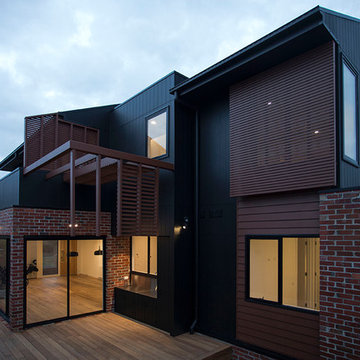
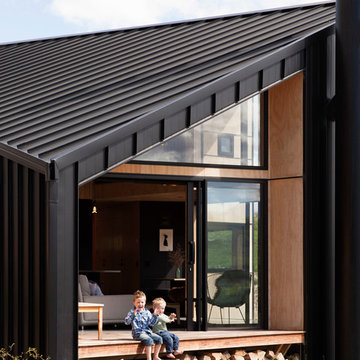
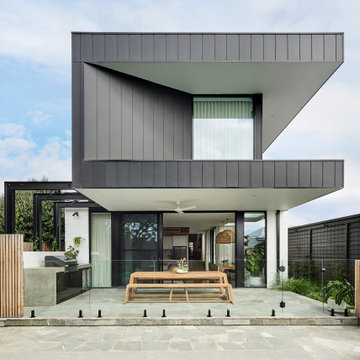
The living space and kitchen have outlook and access to the deck and built in BBQ. Timber screen and cantilevered pergola frame up the outdoor living space.







 Paul Cashin Architects
Photography by Richard Chivers https://www.rchivers.co.uk/
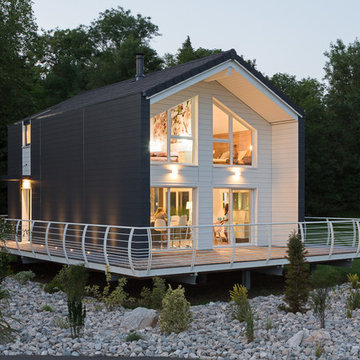
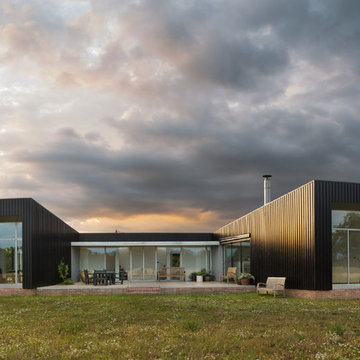
Marshall House is an extension to a Grade II listed dwelling in the village of Twyford, near Winchester, Hampshire. The original house dates from the 17th Century, although it had been remodelled and extended during the late 18th Century.
The clients contacted us to explore the potential to extend their home in order to suit their growing family and active lifestyle. Due to the constraints of living in a listed building, they were unsure as to what development possibilities were available. The brief was to replace an existing lean-to and 20th century conservatory with a new extension in a modern, contemporary approach. The design was developed in close consultation with the local authority as well as their historic environment department, in order to respect the existing property and work to achieve a positive planning outcome.
Like many older buildings, the dwelling had been adjusted here and there, and updated at numerous points over time. The interior of the existing property has a charm and a character - in part down to the age of the property, various bits of work over time and the wear and tear of the collective history of its past occupants. These spaces are dark, dimly lit and cosy. They have low ceilings, small windows, little cubby holes and odd corners. Walls are not parallel or perpendicular, there are steps up and down and places where you must watch not to bang your head.
The extension is accessed via a small link portion that provides a clear distinction between the old and new structures. The initial concept is centred on the idea of contrasts. The link aims to have the effect of walking through a portal into a seemingly different dwelling, that is modern, bright, light and airy with clean lines and white walls. However, complementary aspects are also incorporated, such as the strategic placement of windows and roof lights in order to cast light over walls and corners to create little nooks and private views. The overall form of the extension is informed by the awkward shape and uses of the site, resulting in the walls not being parallel in plan and splaying out at different irregular angles.
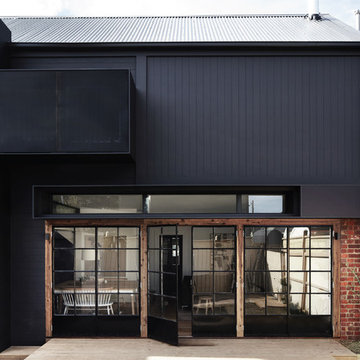
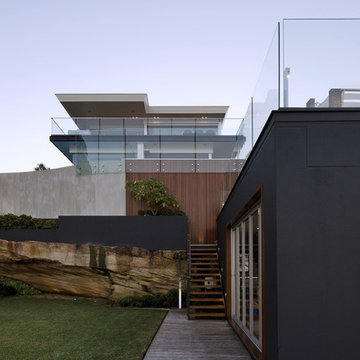
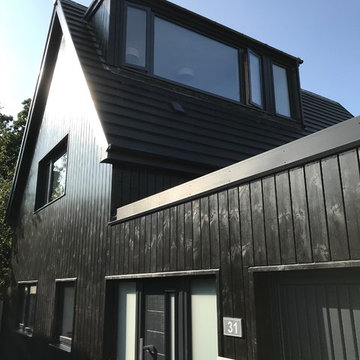
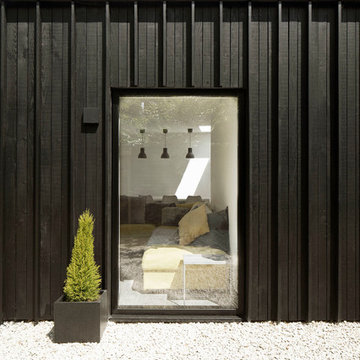
Externally, timber larch cladding is used as the primary material. This is painted black with a heavy duty barn paint, that is both long lasting and cost effective. The black finish of the extension contrasts with the white painted brickwork at the rear and side of the original house. The external colour palette of both structures is in opposition to the reality of the interior spaces. Although timber cladding is a fairly standard, commonplace material, visual depth and distinction has been created through the articulation of the boards. The inclusion of timber fins changes the way shadows are cast across the external surface during the day. Whilst at night, these are illuminated by external lighting.
A secondary entrance to the house is provided through a concealed door that is finished to match the profile of the cladding. This opens to a boot/utility room, from which a new shower room can be accessed, before proceeding to the new open plan living space and dining area.



 Kirsten Johnstone Architecture
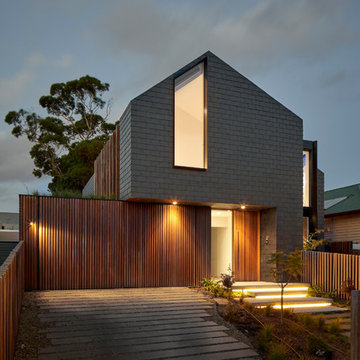
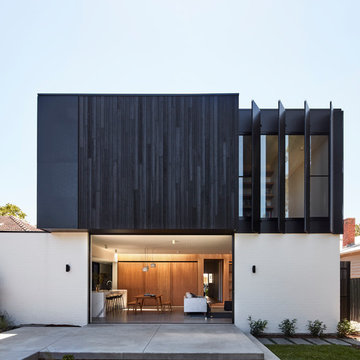
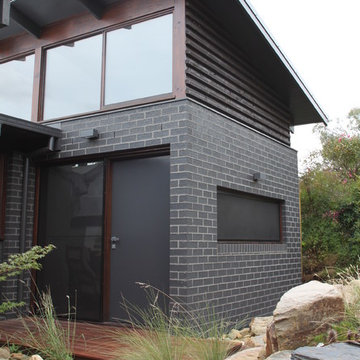
Modern brickwork addition to existing 'Merchant Builder' residence originally constructed in the 1970s. The new addition comprised a large home office with an angled leanto roof to accept the photovoltaic solar cells at an optimal angle, generous natural light and ventilation, low maintenance materials and drought tolerant native garden.
 DGK Architects
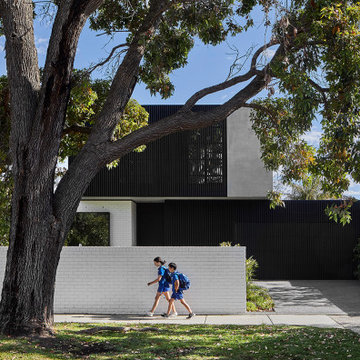
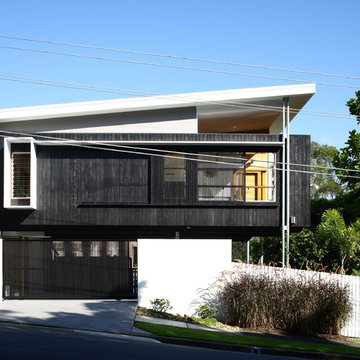
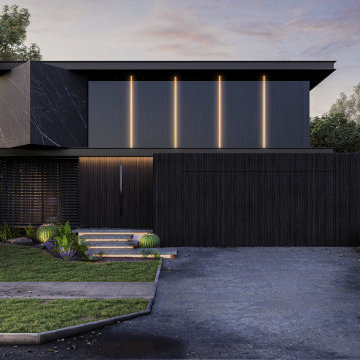
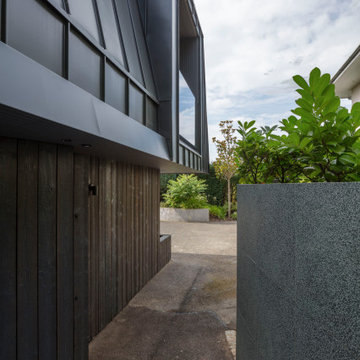
Behind this striking black façade lies a uniquely bespoke, subdued and luxurious masterpiece.
– DGK Architects


 Francesco Pierazzi Architects
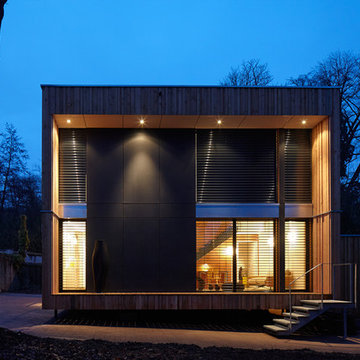
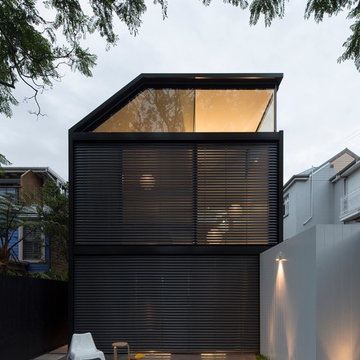
Situated on the outskirts of Guildford, Surrey, with a direct view of the North Downs on the horizon, CASA BASSA is a small house built on the footprint of a previously nondescript garage. The design aims to redefine a typology by combining multiple dwelling types, creating a hybrid house that can adapt to various uses and layouts.
Upon completing the refurbishment of their contemporary villa, which included grounds designed by garden designer Adolfo Harrison, the clients approached FPA for a creative solution to expand their space. They sought to accommodate friends more comfortably, allowing them to fully enjoy the house and gardens together.
The initial investigation considered redesigning redundant rooms and converting attic spaces, but it was soon clear that a standalone building would offer a more memorable experience. As the design evolved, the new structure was envisioned as a versatile space, providing an escape for the teenage daughters, an occasional office, a gym, and guest accommodations.
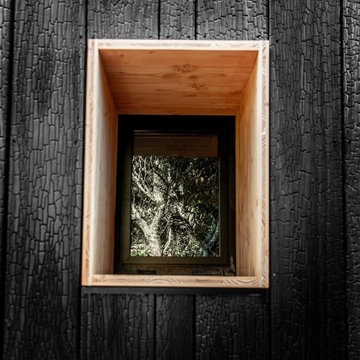
Loosely inspired by concepts derived from artificial intelligence—the owners’ field of expertise—the design draws from AI algorithms, translating code into binary patterns of 0s and 1s. This concept is reflected in the architectural language, where a vertical binary rhythm influences the selection of technical solutions, materials, and finishes. Elements such as timber goalpost frames, zinc cladding, charred timber, battens, and porcelain tiles are meticulously arranged in binary patterns of seam and field, solid and void, gap and slat, ridge and valley. The result is a dynamic and structured interplay of textures, celebrating the intersection of technology and craftsmanship.
The entrance is subtly marked by a sculptural set of steep steps, which navigate the garden’s level changes. The doors and openings are cleverly disguised within the timber cladding. The steps, wall, and floor, creating a small open-air antechamber, are clad in green patterned tiles that establish a distinct connection to the landscape, setting the space apart from the building.
The plinth of the original garage has been preserved, with its layout unchanged to reuse the existing footings. A mansard-style roof, higher than the original, has been added over the plinth to create an open space accessed via a double-height area. The dynamic roof shape responds to the site’s topography, resulting in elevations that vary significantly on each of the four sides.
While the exterior of Casa Bassa is dark and monolithic, the interior presents a stark contrast—bright, monochrome, and flooded with natural light. The loft-like open space engages with the outdoors and the hills beyond through expansive picture windows, creating a seamless connection between interior and landscape. There is a deliberate sense of surprise for visitors, who enter through a hidden, small door and traverse a dynamic, funnel-like stairwell before emerging into the expansive interior—a progression of emotions from enclosure to openness.
The use of simple, standalone volumes for the kitchen and storage (which also doubles as a bedhead) is cleverly located on the upper level, helping to break down the open space and effectively zone the area.
The extensive use of timber and timber-based materials, the reuse of significant portions of the existing structure, including original steel girders, and the incorporation of sustainable materials paired with high-level insulation have all contributed to creating a building that prioritizes sustainability. It boasts a low carbon footprint, high embodied carbon efficiency, and a substantial percentage of recyclable components.

 Alki Design
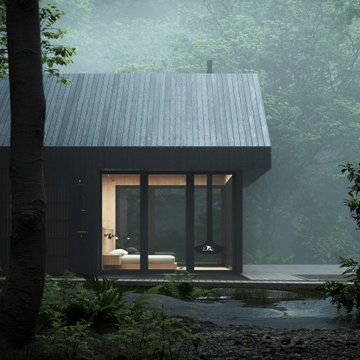
Bow Cabin, nestled in the enchanting forests of Washington State, stands as an architecturally refined retreat designed for a seamless integration with nature. Embracing a timeless gable form encased with charred timber, the cabin pays homage to traditional craftsmanship while offering a contemporary aesthetic that harmonizes with the surrounding forest. The indoor suspended fireplace and outdoor shower accentuate the connection with nature, creating an immersive experience. Warm timber interiors, sustainably sourced, contribute to Bow Cabin's cozy and inviting atmosphere, making it a haven for relaxation and contemplation in the heart of the forest.
Bow Cabin is not just a retreat; it's a statement of sustainable elegance. Beyond its captivating design, the cabin embraces environmentally conscious choices, from locally sourced materials to the charred timber cladding's low-maintenance durability. This thoughtfully crafted sanctuary embodies the essence of simplicity, sustainability, and serenity, offering an unparalleled living experience in the midst of Washington State's life giving forest.

1