
3.187 Billeder af lille køkken med integrerede hvidevarer
Sorteret efter:
Budget
Sorter efter:Populær i dag
1 - 20 af 3.187 billeder
Item 1 ud af 3
 Hause Staging
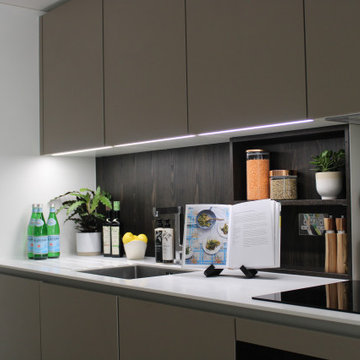
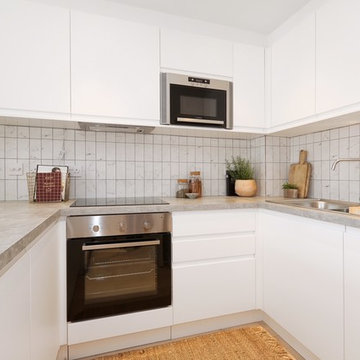
An ultra modern kitchen with greige flat-panel cabinet frames, white quartz countertops, a fibreglass splashback and high-end integrated appliances.
We worked with the client to stage this apartment for sale - highlighting the space and workability of the kitchen layout with an offset dining area.


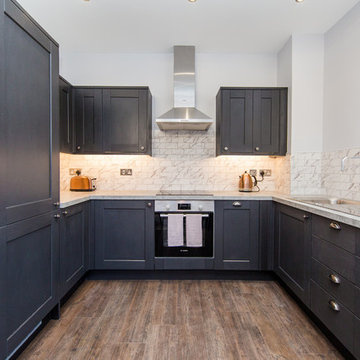
 Studio Akiva
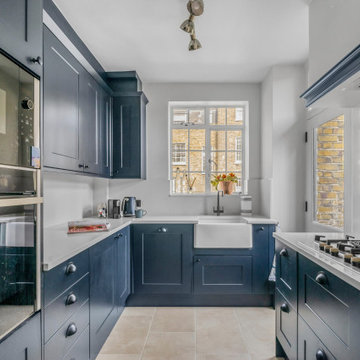
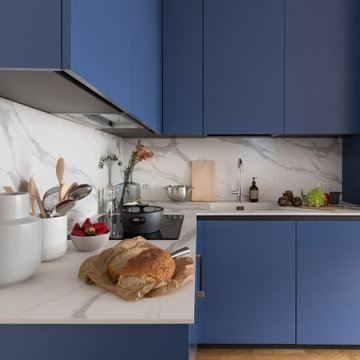
This image captures the beautifully balanced kitchen at Benyon House—a space where heritage-inspired design meets modern practicality. Deep navy shaker-style cabinetry provides a strong, classic framework, contrasted with crisp white quartz worktops that brighten the space and add a refined finish.
The layout is compact but considered, making the most of every inch. A white butler sink beneath the window nods to traditional styling, while matte black hardware and fixtures introduce a contemporary edge. Integrated appliances keep the look seamless, and the gas hob, framed by matching cabinetry, gives the kitchen a professional, purposeful feel.
Natural light pours through the large sash window and adjacent glass-panelled door, illuminating the rich textures of the surrounding brickwork and highlighting the clean lines of the interior. A soft neutral tiled floor ties the scheme together, offering warmth and durability underfoot.
Subtle styling—fresh tulips on the windowsill, a magazine on the worktop, and a cluster of well-placed small appliances—grounds the design in real, everyday life. This is a kitchen that feels generous, functional and elegantly timeless—a space designed for living, cooking, and quietly impressing.
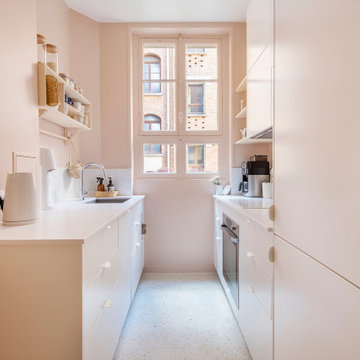
 Mon Concept Habitation
Après plusieurs visites d'appartement, nos clients décident d'orienter leurs recherches vers un bien à rénover afin de pouvoir personnaliser leur futur foyer.
Leur premier achat va se porter sur ce charmant 80 m2 situé au cœur de Paris. Souhaitant créer un bien intemporel, ils travaillent avec nos architectes sur des couleurs nudes, terracota et des touches boisées. Le blanc est également au RDV afin d'accentuer la luminosité de l'appartement qui est sur cour.
La cuisine a fait l'objet d'une optimisation pour obtenir une profondeur de 60cm et installer ainsi sur toute la longueur et la hauteur les rangements nécessaires pour être ultra-fonctionnelle. Elle se ferme par une élégante porte art déco dessinée par les architectes.
Dans les chambres, les rangements se multiplient ! Nous avons cloisonné des portes inutiles qui sont changées en bibliothèque; dans la suite parentale, nos experts ont créé une tête de lit sur-mesure et ajusté un dressing Ikea qui s'élève à présent jusqu'au plafond.
Bien qu'intemporel, ce bien n'en est pas moins singulier. A titre d'exemple, la salle de bain qui est un clin d'œil aux lavabos d'école ou encore le salon et son mur tapissé de petites feuilles dorées.
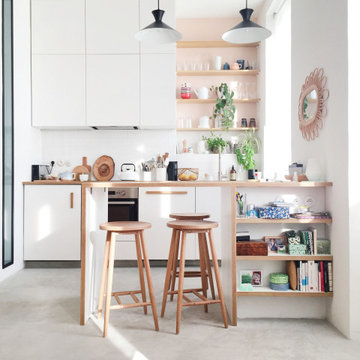

 Katarina Mijic
Une cuisine tout équipé avec de l'électroménager encastré et un îlot ouvert sur la salle à manger.

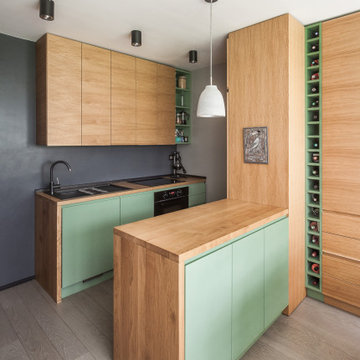
 Dabrovska Design
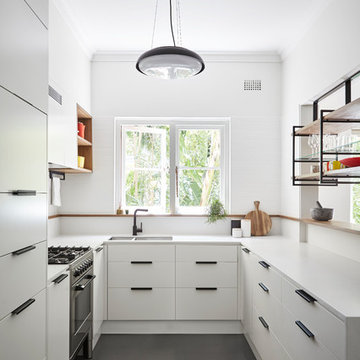
The kitchen has been integrated with open plan living and dining area by creating a comfortable breakfast bar. The sober material selection of concrete worktop, marble effect tiles and timber infused a fresh and relaxed look that doesn’t overpower the compact space.
 Benedict Design
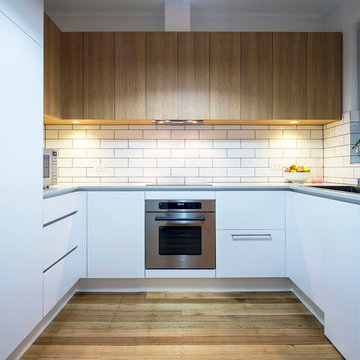
New kitchen joinery opening out through new wall opening to living and dining area.
Photography: Natalie Hunfalvay


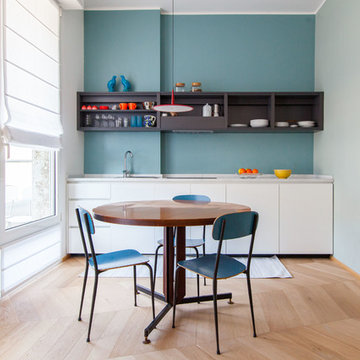

 Hélène Guillou Architecte
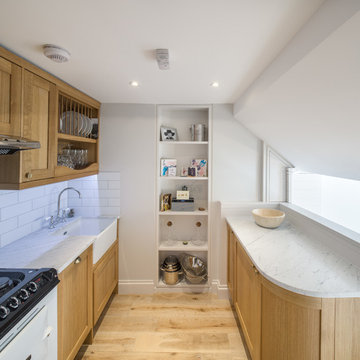
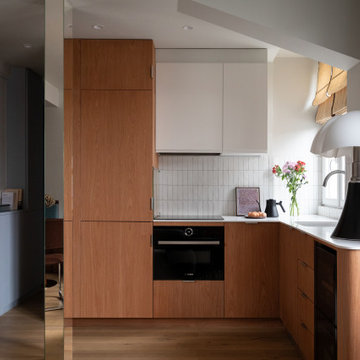
La cuisine sur mesure affirme son caractère à travers un plaquage en cerisier, subtilement contrasté par un plan de travail en Kerrock blanc et une crédence épurée. Contrainte majeure du projet, une colonne technique implantée au cœur du passage a été détournée en atout : dissimulée derrière un miroir dessiné sur mesure, elle capte la lumière, la diffuse et agrandit visuellement l’espace.





 Higham Furniture
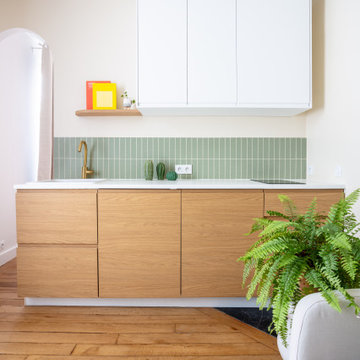
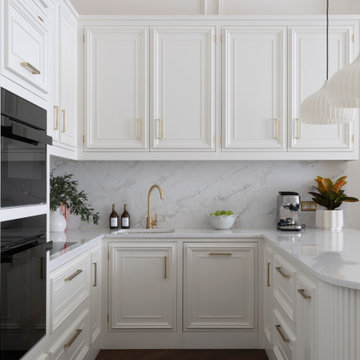
The sink run combines the Villeroy & Boch Cisterna 60C ceramic undermount sink with an Abode Atlas single lever tap in brushed brass, positioned directly beside the integrated dishwasher for practical day-to-day use. Wall cabinetry above was incorporated to maximise storage capacity, which was particularly important in this kitchen due to the absence of a dedicated larder or pantry cabinet.
1